Try it: compare two weeks
Pop in your morning weigh-ins (pounds or kilos, just be consistent). Missing a day? Leave it blank.
MTWTFSS
Last wk
This wk
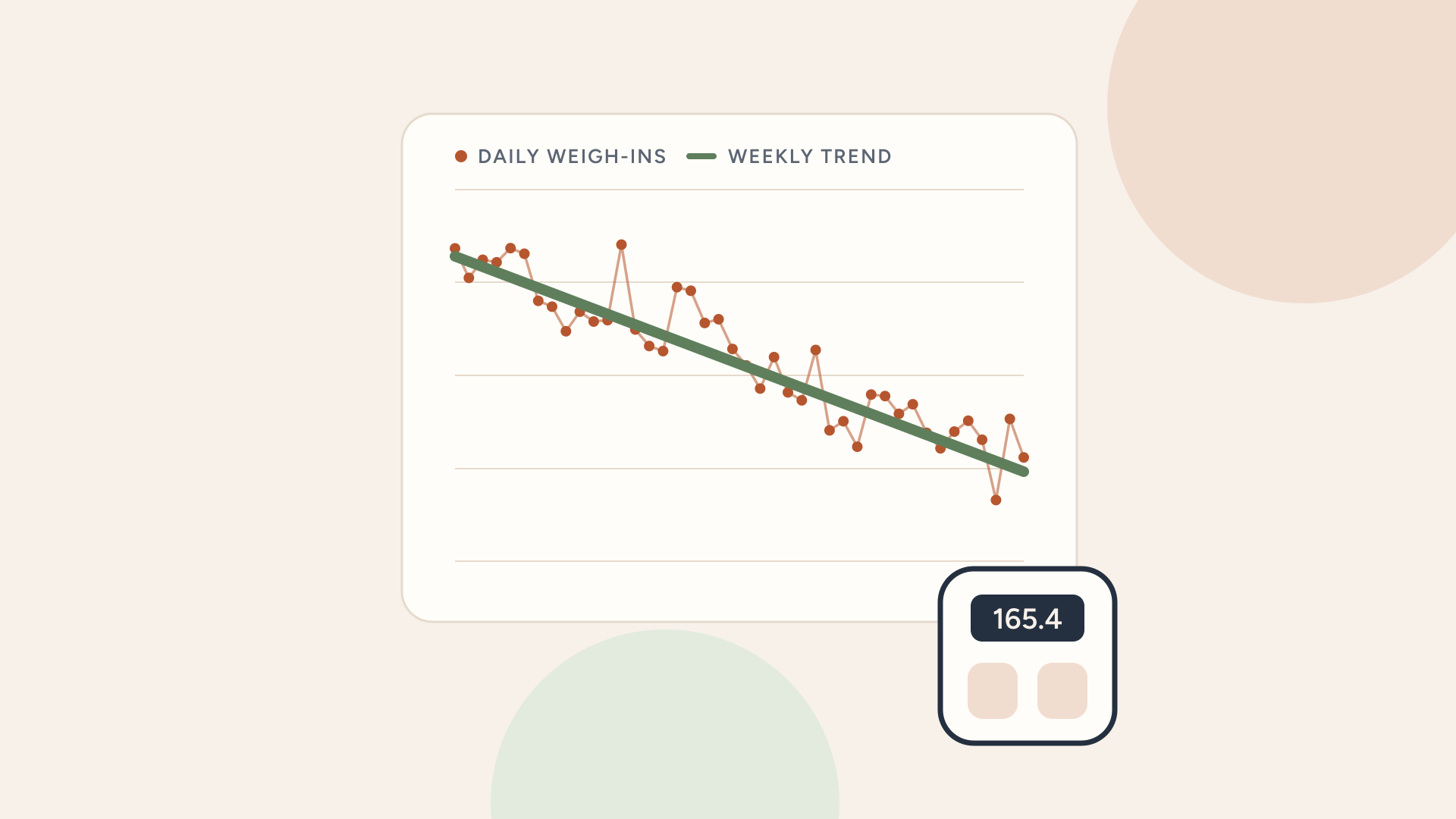
You've been doing the work. Eating better, moving more, showing up, taking your GLP-1s. And for a while the scale was going in the right direction... then it just... stopped.
It's one of the most frustrating parts of trying to lose fat, and it's also one of the most common. The good news is that a stall is information, not a verdict. Let's figure out what it's telling you.
Your weight can swing by a few pounds from one day to the next without any change in body fat. Salt, carbs, alcohol, a hard workout, poor sleep, stress, travel, your menstrual cycle, even how recently you went to the bathroom... all of these shift the number.
That's why one weigh-in tells you very little. A weekly average tells you a lot more. As a rule of thumb, it's only a true plateau if your weekly average has been flat for three to four weeks.
Try it: compare two weeks
Pop in your morning weigh-ins (pounds or kilos, just be consistent). Missing a day? Leave it blank.
The scale measures one thing: your total mass at that moment. It can't see most of what's happening when you build healthier habits. Tap anything you've noticed since you started.
Tap the ones that apply to you.
If it really is a plateau, there's usually a reason. Pick the one that feels closest... you can always come back and read the others.
Patience matters. Fat loss isn't linear, and nobody's progress looks like a neat downward line. But patience works best alongside curiosity. If the trend has been flat for a month, it's worth asking why rather than simply trying harder or eating less.
A plateau isn't proof you've failed. It's a sign that something needs adjusting, and sometimes that something is your expectations.
And here's one more option nobody talks about: you're allowed to stop for a while. Spending a few weeks (or months) at maintenance, holding steady whilst you build strength and solid habits, is a skill in its own right. It's also the skill that keeps the weight off for good.
This is exactly what I help people figure out. Together we look at your eating, training, sleep and stress, and find the change that will actually move things forward, without the extremes.
Sources
This post is for general education and isn't medical advice. If you have a health condition or take medication, check with your doctor before changing how you eat or train.